
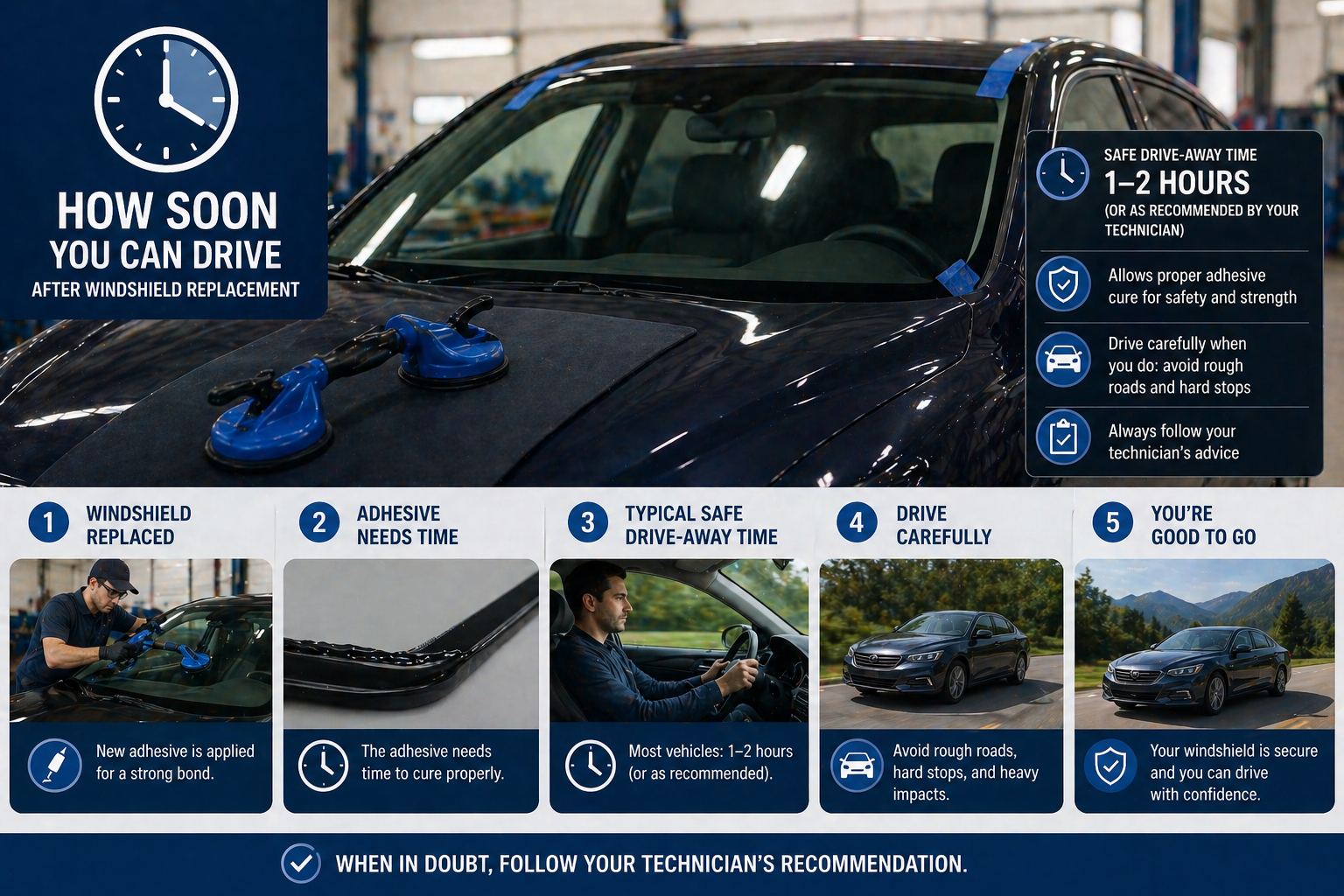
After a windshield replacement, one of the first questions most drivers ask is a practical one: how long do I have to wait before I can drive? It’s a reasonable concern — nobody wants to sit around longer than necessary, but nobody wants to compromise a fresh installation by leaving too soon either. Understanding how soon you can drive after windshield replacement comes down to one thing above all others: the adhesive that holds your new windshield in place, and how long it needs to reach a safe working bond.
At Low Price Auto Glass in Hammond, Indiana, we walk every customer through this after their service is complete. This guide covers what the waiting period actually involves, what factors affect it, and what precautions to take in the hours and days following your replacement — so you leave informed and your installation stays intact.
Why the Wait Matters: What’s Happening With the Adhesive
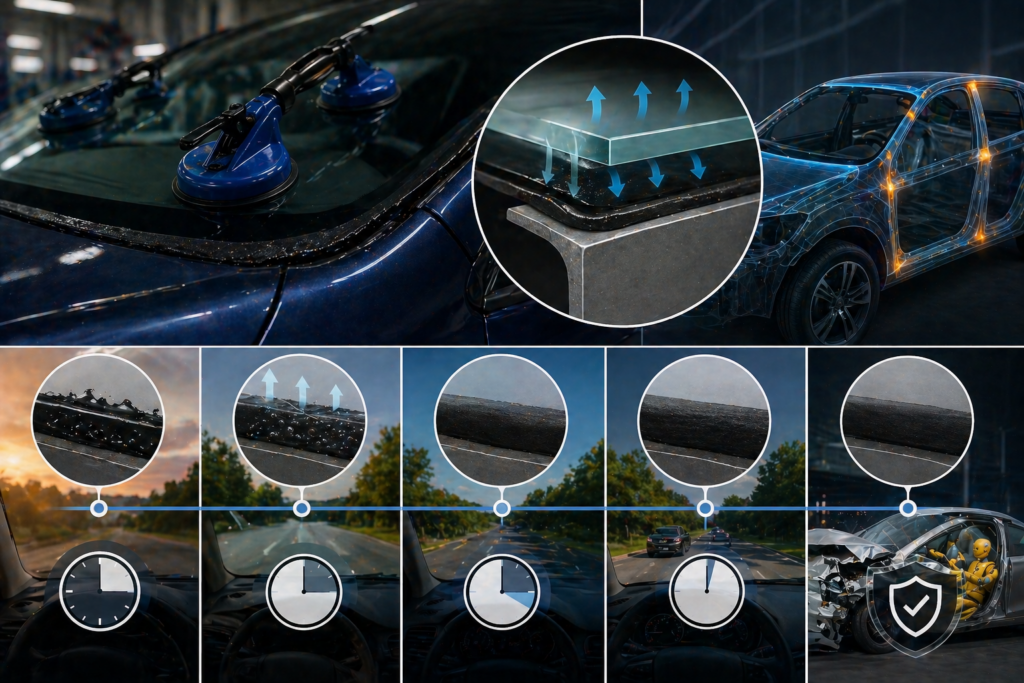
Modern windshields are not mechanically fastened to your vehicle’s frame — they are bonded in place using a high-strength urethane adhesive. This adhesive is the critical connection between the glass and the vehicle body, and it serves a purpose far more important than simply keeping the windshield from rattling. A properly bonded windshield is a structural component of your vehicle.
In a frontal collision, the windshield works in concert with your airbags — the passenger-side airbag in particular is designed to deploy and inflate against the windshield, using it as a backstop to direct the bag toward the passenger. If the windshield is not fully bonded and pops out on impact, that deployment is compromised. In a rollover accident, a properly bonded windshield provides a significant portion of the vehicle’s roof crush resistance, helping protect the occupants inside. A windshield that fails under those conditions offers far less protection than the vehicle was engineered to provide.
This is why the cure time of the adhesive is not a formality — it is a genuine safety requirement.
What Is Safe Drive-Away Time (SDAT)?
Safe Drive-Away Time, commonly referred to as SDAT in the auto glass industry, is the minimum amount of time that must pass after a windshield replacement before the vehicle can be driven safely. It represents the point at which the urethane adhesive has developed enough initial bond strength to hold the windshield securely under normal driving conditions.
With the fast-cure urethane adhesives used by professional auto glass shops today, the industry-standard minimum SDAT is one hour under normal temperature and humidity conditions. This is the minimum — the adhesive has not fully cured at this point, but it has developed enough early-stage bond strength to withstand routine driving.
It is important to understand that one hour is not the finish line. It is the earliest point at which driving is considered safe. Full adhesive cure — the point at which the bond has reached its maximum designed strength — typically takes 24 to 48 hours. During that window, certain activities and conditions can still stress the bond in ways that affect the long-term quality of the installation.
Factors That Can Change Your Specific Wait Time
While one hour is the standard minimum, several real-world factors can extend the time your technician recommends before driving. Hammond, Indiana’s climate plays a meaningful role here — this is not a one-size-fits-all number.
Temperature
Urethane adhesive cures through a chemical reaction that requires adequate heat to proceed at its intended rate. In warm conditions — roughly 60°F and above — the reaction proceeds normally and the one-hour SDAT is reliable. In colder temperatures, the reaction slows. During Indiana winters, when temperatures frequently drop well below freezing, cure times can extend significantly. If your replacement is performed in cold weather, your technician may recommend a longer wait before driving and will advise you accordingly.
Humidity
Urethane adhesive also requires a degree of ambient moisture to cure properly — the chemical reaction is moisture-activated. Very low humidity can slow curing, while moderate humidity supports it. In most normal conditions this is not a significant variable, but in extremely dry winter conditions it can contribute to an extended cure window alongside cold temperatures.
Adhesive Type
Not all urethane adhesives are formulated the same way. Fast-cure adhesives, which are standard at professional auto glass shops, are specifically engineered to reach safe drive-away strength within the one-hour window. Extended-cure or specialty adhesives used for certain vehicle applications may have different SDAT requirements. Your technician will always specify which adhesive was used and what the recommended wait time is for your particular installation.
Vehicle Type and Windshield Design
Larger, heavier windshields — such as those on full-size trucks or SUVs — place more demand on the adhesive bond simply due to their size and weight. Vehicles with particularly tight body tolerances, or those where the windshield plays a more pronounced structural role, may also benefit from a conservative approach to drive-away timing.
What to Avoid in the First 24 to 48 Hours
Even after the minimum safe drive-away time has passed, there are several things worth avoiding during the full cure window to protect the quality of your installation:
- Car washes. Avoid all car washes — automatic or touchless — for at least 24 to 48 hours. High-pressure water directed at the windshield edges can stress the adhesive seal before it has fully set. After 24 hours, careful hand washing is acceptable, but keep pressure away from the windshield perimeter.
- Rough roads and highway speeds. If possible, avoid particularly rough roads, railroad crossings, and sustained high-speed highway driving in the first several hours after your replacement. Vibration and road shock during the early cure window can introduce micro-movement at the bond line.
- Slamming doors. Closing car doors harder than necessary creates a pressure wave inside the cabin that can stress the adhesive bond. Close doors gently for the first day.
- Leaving the retention tape in place too long. Many technicians apply tape around the windshield perimeter after installation to help hold the glass while the adhesive sets. This tape should be removed within the time frame your technician specifies — usually within 24 hours — to prevent it from leaving residue or affecting the seal.
- Parking in extreme heat or cold immediately after replacement. If possible, allow the vehicle to sit at a moderate temperature during the initial cure period. Parking in direct sun on a very hot day, or outdoors in freezing temperatures, immediately after replacement adds thermal stress to an adhesive that is still in its early bonding phase.
A Quick Note on ADAS Calibration and Drive-Away Time
For vehicles equipped with Advanced Driver Assistance Systems — lane departure warning, automatic emergency braking, adaptive cruise control — windshield replacement also typically requires ADAS camera recalibration. This calibration process cannot begin until the windshield adhesive has cured sufficiently, which is another reason the post-replacement wait window matters. If your vehicle requires calibration, your technician will account for cure time in the service timeline and confirm when calibration can safely proceed.
Frequently Asked Questions About Driving After Windshield Replacement
What is the minimum safe drive-away time after a windshield replacement?
The industry standard minimum is one hour when modern fast-cure urethane adhesive is used under normal temperature and humidity conditions. Cold weather, specialty adhesives, or larger windshields may extend this. Your technician will always confirm the specific wait time for your installation.
Why does temperature affect how long you need to wait after windshield replacement?
Urethane adhesive cures through a moisture-activated chemical reaction that slows in cold temperatures. During Indiana winters, cold conditions can meaningfully extend the time needed to reach a safe initial bond. Your technician will factor in current weather conditions when advising you on drive-away time.
Is it safe to go through a car wash after windshield replacement?
Not for the first 24 to 48 hours. High-pressure water at windshield edges can stress the adhesive before it has fully cured. After 24 hours, careful hand washing away from the perimeter is fine. Avoid automatic and touchless car washes for at least 48 hours.
Can I roll my windows down right after a windshield replacement?
Leave windows slightly cracked immediately after replacement to equalize cabin air pressure, but avoid repeatedly opening and closing them fully in the first few hours. Normal window operation is fine after 24 hours.
What happens if I drive too soon after a windshield replacement?
Driving before the adhesive has developed adequate bond strength risks the windshield failing in a collision — compromising airbag deployment and rollover protection. Road vibration during the cure window can also weaken the final bond quality, even without an accident.
How long does a windshield replacement take at Low Price Auto Glass in Hammond?
The physical replacement typically takes 60 to 90 minutes, after which the drive-away wait begins. Most customers are ready to leave within one to two hours of arrival, with full curing continuing over the next 24 to 48 hours.
When in Doubt, Ask Before You Drive
Every windshield replacement is slightly different — different vehicles, different adhesives, different weather conditions, different installation requirements. The one-hour standard is a reliable general guideline, but your technician’s specific recommendation for your installation always takes priority. If you’re not sure, ask before you leave — it costs nothing and ensures your replacement performs exactly the way it was designed to.
At Low Price Auto Glass in Hammond, Indiana, we take the time to walk every customer through post-installation care before they leave our shop. We’ve been trusted by drivers throughout the Hammond area for years, and we back every installation with the quality and service our customers expect. Call us today for a free estimate — we’ll get your vehicle taken care of quickly, professionally, and at the best price in the area.